The other day, a colleague commented on my TEF talk in which I summarized what dubbing is, what sets it apart from translation, and what makes it a particularly fascinating way to earn one’s living. I also said a little about the state of our industry.
But anyway, this colleague, a highly experienced and decorated dubbing scriptwriter and director, said something like, “I loved your talk. Just one thing. When you say that audiences get used to the mismatch between an actor’s lips and what should be their movement if the actor spoke the target language, that sounds like we can just do whatever we want, and the audience will get used to it eventually.” What excellent feedback. In the future – and given a little more time – I will make sure that I cannot be misunderstood in this way. I could mention, for example, that it takes me a full working day to write 10 minutes worth of original material. That would point to the fact that we do spend lots and lots of time and effort trying to make the new text fit the mouth movements of the original.
But the comment also made me think about something else. It was very obviously coming from an insider perspective. If you spend all your working hours trying to write a script that is as lipsync as humanly possible, and someone says, “well, they’ll get used to it eventually”, of course you might feel a little disrespected. Why bother then, if the audience will get used to it anyway?
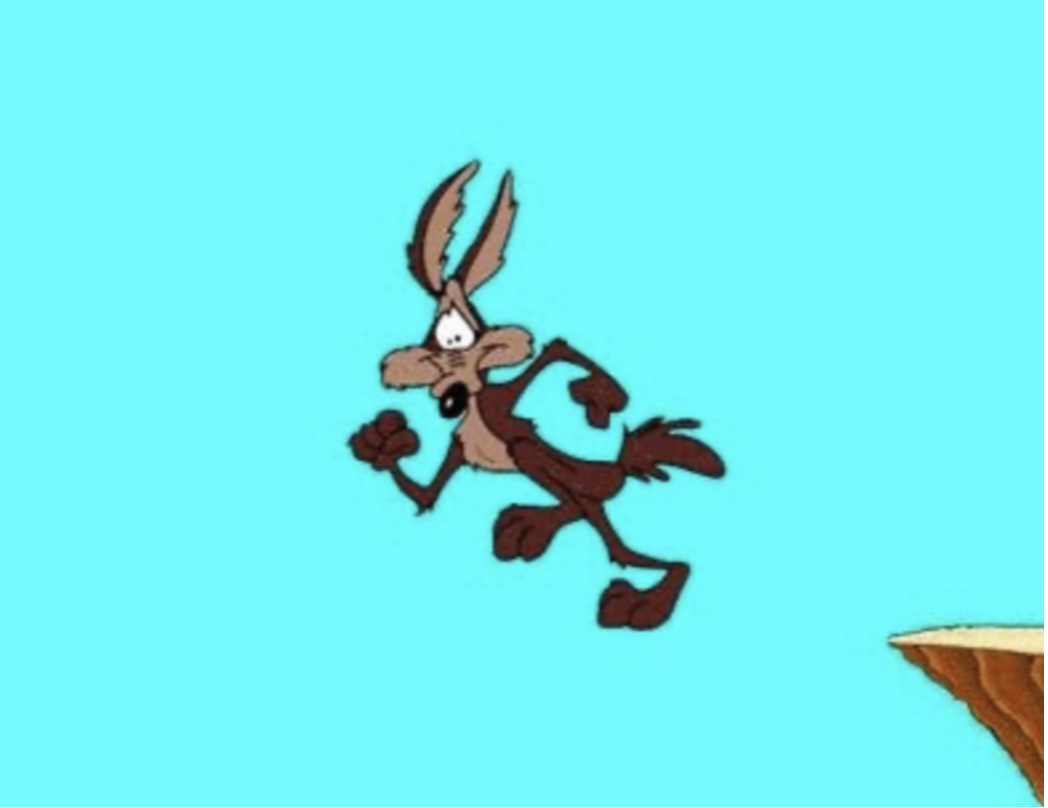
But the fact is – ALL of entertainment is a matter of getting used to it. It’s about convincing an audience of something that usually isn’t real and often not even realistic at all. Whether they are indeed convinced depends not only on whether you have done a good job as a writer, or as an actor. It’s equally dependent on the genre and on the culture. A cartoon coyote falling several hundred yards off a cliff and gettting up alive is not realistic. Yet, it convinces the audience. Tom Cruise hanging on to a helicopter while the pilot does everyting to shake him off, is not realistic. But it convinces an audience. Dance numbers in a movie about a terrorist are not realistic. But in Bollywood, the audience is convinced.
Mismatched lips are not realistic.
And mismatched lips is all that most producers of entertainment, produced in countries like the US or the UK where dubbing is still very new, see. They do not understand the language into which their product is translated. They cannot judge whether the translated product connects with an audience, nor why it does. All they see is mismatched lips. This cannot be good. This must be repaired. There’s gotta be a program or an app or some AI shizzle that can make this horrible thing go away.
What we – a worldwide industry with close to a hundred years of tradition that has made lots of people lots of money and essentially made Hollywood what it is today – need to do in order to survive, is to convince the producers that mismatched lips isn’t the problem. If a localization doesn’t work, the problem might be a bad translation, not enough time for research, or a tool that doesn’t allow dubbing scriptwriters to listen to the dialogue alone in order to really understand what’s being said. Mismatched lips are not realistic. But if the text and the delivery are on point, the audience will be convinced. Not of the dub. In fact, they won’t notice the dub at all. They will be convinced of the movie.